

Information
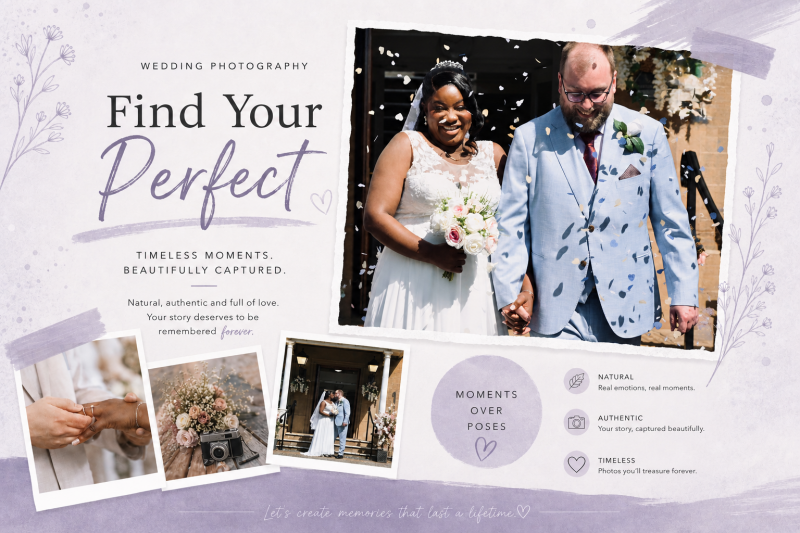
How to Find the Right Natural Wedding
Photographer
Many couples say the same thing at the start of their photographer search: "We just want natural photos.
Real moments. Nothing posed." It sounds simple. Then the research begins, and suddenly every
photographer on every website is promising exactly that. Candid. Documentary. Relaxed. The words blur
together after the fifth portfolio, and you're left wondering whether any of it actually means what you think
it means.
Here's the honest truth: the language of natural wedding photography has been borrowed so freely that it
no longer tells you much on its own. What does tell you something is knowing what the style genuinely
looks like in practice, how a real natural wedding photographer behaves on the day, and what to look for in
a portfolio before you ever send an enquiry. Tasha, a candid wedding photographer covering
Nottinghamshire and Leicestershire, describes her approach simply: she disappears so completely into
the rhythm of a wedding day that guests forget she has a camera. That quality, that invisible presence, is what this guide will help you recognise and find for yourself.
From understanding what natural photography actually means, to reading portfolios with a sharper eye,
asking the questions that matter, and knowing what your contract should include, here is everything you
need before you book a natural wedding photographer.
What "natural wedding photography" actually means
The word "natural" describes a feeling, not a method. It refers to relaxed, unforced, emotionally authentic
images where people look like themselves rather than performers. It is the opposite of stiff, direction
heavy portrait sessions where everyone stands exactly where they are told and smiles on command. A
natural wedding photographer captures what is genuinely happening rather than what has been arranged
to happen.
Documentary and reportage are slightly different terms that describe the method used to achieve that
feeling. Documentary and reportage photographers work as photojournalists, purely observing without
any direction at all. Natural photography often sits somewhere between the two extremes: mostly
unobtrusive coverage throughout the day, with occasional gentle, relaxed guidance during portrait
moments. A good unposed wedding photographer is not a robot who never speaks to you; they are
someone who knows when to step back and when to offer a simple, light prompt that opens up a real
reaction rather than scripting one. For a practical primer on candid techniques, see this candid wedding
photography guide.
One common point of confusion is worth clearing up before you go any further. Natural light photography
and natural wedding photography are not the same thing. Natural light refers to using ambient light
without flash. Natural photography refers to the posing approach. A photographer can shoot entirely by
window light and still direct every single pose. When you are searching for unposed, candid wedding
coverage, you are asking about how a photographer relates to people, not just how they light a room. If
you want to read about making the most of ambient light at sunset, have a look at these Sunset wedding
photos; Utilizing natural light for stunning results.
How a natural wedding photographer behaves on your wedding day
Picture a guest who is a little quieter than the rest, moving softly between groups, watching and
anticipating rather than directing. That is the closest description of a genuinely candid wedding
photographer at work. They use longer lenses to photograph intimate moments from a respectful
distance rather than hovering over two people sharing a hug. They read the emotional temperature of the
room, position themselves before a moment happens rather than reacting to it afterwards, and rarely draw
attention to themselves. Often, guests relax within the first hour and simply stop performing for a lens
that is barely visible.
This is how Tasha works at the Nottinghamshire & Leicestershire: The Perfect Playground for Candid
Couple Shots weddings she photographs. The approach is not about disappearing so thoroughly that
nothing meaningful gets captured; it is about being present in a way that does not change how the day
feels. When guests behave naturally, their expressions are genuine, their conversations unguarded, and
the photographs look like something captured from inside the day rather than staged outside it.
That said, natural photography does not mean zero interaction. An experienced candid wedding
photographer will occasionally offer a soft prompt, suggesting a couple walk toward a pocket of light, or
quietly signalling two people to share a moment. What separates this from traditional posing is that the
prompt opens space for a real reaction rather than scripting one. Photographers who over-direct miss the
emotional truth of the day. Photographers who completely disappear without capturing anything
meaningful have over corrected in the other direction. The skill is in finding the balance.
What the experience feels like compared to a traditional posed shoot
Many couples have only ever experienced the "stand here, look there, now smile" version of wedding
photography. If that is your only reference point, the contrast of a truly candid shoot can feel almost
disorienting at first, in the best possible way. There are no constant interruptions to your own reception.
Nobody pulls you away from your first dance to go and stand by a gate. You are not asked to look at each
other and laugh for the third time in a row. You simply live your day while someone quietly captures it.
For couples who are camera-shy, anxious, or neurodivergent, this shift is particularly significant. Being
allowed to exist rather than perform produces a completely different emotional outcome in the
photographs. The nerves that show up in forced poses are absent. What replaces them is something far
more valuable: genuine connection, captured at its most unguarded.
The same principle extends to your guests and family. Without a photographer directing every grouping,
aunties laugh properly, children wander into frame on their own terms, grandparents exchange quiet
glances that nobody choreographed. These are frequently the images couples treasure most a decade
later. Not the perfectly composed kiss, but the moment their dad cried when he thought the camera was
pointed elsewhere. Natural coverage captures emotional legacy, not just aesthetics.
Portfolio signals that show a natural wedding photographer is genuinely candid
A beautifully designed website is not evidence of a genuine natural style. The portfolio is. When you look
at a photographer's galleries, you are looking for specific things that prove how they actually work rather
than how they describe themselves.
Genuine candid portfolios contain a high proportion of close emotional shots where nobody is looking at
the lens: unguarded laughter, whispered conversations, tears caught from across the room. They include
natural group interactions, environmental detail shots that build a narrative, and a sequential quality that
tells a story rather than presents a set of random highlights. Request full wedding galleries, not curated
highlight collections. A real candid photographer has nothing to hide in the quieter moments of a full
gallery. Industry guidance suggests that when 80% or more of a photographer's images show subjects
unaware of or unbothered by the camera, that is the clearest signal that the style is genuine.
Watch out for specific red flags:
- Every couple shot features direct eye contact with the lens across multiple different weddings.
Identical compositions appearing in gallery after gallery, suggesting a formulaic approach rather than
organic observation. - Portfolios heavy with styled shoots, staged events with no real guests or emotional unpredictability,
rather than actual weddings. - Beautiful lighting and composition but almost no emotional variation: a real candid portfolio contains
joy, nerves, seriousness, and quiet intimacy alongside the obvious happy moments.
Consistency across three or more real wedding galleries is the strongest proof of an authentic unposed
approach. One exceptional wedding could be luck. Three or four consecutive ones at the same standard
is craft.
Questions to ask before you book
An initial enquiry or meeting with a potential photographer is not a sales pitch you sit through: it is a
genuine conversation about fit. The best questions are the ones that reveal how a natural wedding
photographer actually works, not just how they have learned to talk about their work.
Ask them to describe their style in their own words and then listen for specificity. A photographer who
genuinely lives their candid approach will explain lens choices, how they anticipate moments, and
whether they use two cameras to avoid missing unrepeatable reactions. Ask how they handle key
moments like a first look or a speech reaction that cannot be recreated. Ask to see three full wedding
galleries from real events. Ask whether they work from a rigid shot list or organically, and why. These
questions separate photographers who have absorbed the vocabulary from those who have built their
entire approach around unobtrusive, authentic coverage. For an example list to adapt to your own
meeting, see these questions every couple should ask a wedding photographer.
Do not overlook the practical questions either, because these protect you on the day itself. Will they
personally be there, or could a second shooter cover your wedding without your knowledge? What
happens if they are ill? Do they carry backup camera bodies? How do they handle low-light UK venues or
unpredictable winter weather? What do they need from you in terms of a timeline or a family list? A
professional photographer welcomes these questions. They signal that you understand the realities of
wedding day coverage, which is a green flag for both parties. If you want to understand the advantages of
additional coverage, read about the benefits of having a second wedding photographer.
Contract terms and delivery timelines to understand before you sign
A great photographer with a vague contract is still a risk. Before you sign anything, check that the scope
of work section clearly describes the hours of coverage, the locations, the number of photographers, and
explicitly names the style of coverage agreed upon. "Natural, documentary-style coverage" should be in
writing, not left to interpretation. This protects you from a dispute later where artistic differences become
a convenient excuse for unmet expectations. For a checklist of essentials to include in photography
agreements, consult this resource on wedding photography contract essentials.
Payment terms in the UK typically follow a 50% non-refundable deposit to secure the date, with the
balance due around 30 days before the wedding, though terms vary by photographer and you should
confirm these in writing. Under UK copyright law (Copyright, Designs and Patents Act 1988), the
photographer retains copyright by default and you receive a personal use licence for printing, sharing, and
creating albums. This is entirely standard and nothing to be alarmed by. The photographer can use your
images in their portfolio; you can use them for personal purposes. Both parties benefit. For more on how
copyright typically works in wedding photography, see this guide to wedding photography copyright.
On image delivery: candid photographers work through large volumes of raw files to find the strongest
unposed moments, which takes longer than a posed shoot with a predictable set of images. Turnaround
times in the UK commonly run to 8, 12 weeks for a full edited gallery, with a preview of 20 to 30 images
sometimes delivered within two to four weeks, though your contract should include firm delivery dates
rather than vague estimates. For full-day coverage, 400 or more fully edited images is a reasonable
expectation based on typical industry practice. Your gallery will usually be delivered via an online platform
with personal download rights included.
Finding the right person, not just the right style
The practical tools in this article, the portfolio checks, the questions, the contract knowledge, exist to
narrow the field. They help you move past photographers who have borrowed the language of natural
wedding photography without truly living it, so you can focus your energy on those who genuinely do.
But after all the research is done, the right natural wedding photographer is also simply someone whose
instinct, personality, and presence feels right for how you want your day to feel. Tasha is a candid wedding
photographer based across the East Midlands who has spent years developing the skill of reading a room,
anticipating moments, and carrying backup gear for every scenario, all while caring genuinely about the
images couples will still be looking at long after everyone else has forgotten the details of the day.
If you are looking for a natural wedding photographer in Nottinghamshire, Leicestershire, or the
surrounding area who will disappear into your day and bring back something real, take a look at the
portfolio and get in touch. A good conversation costs nothing and tells you a great deal. You can also
read more tips and insights on the blogs post with tips and tricks by Tasha Boorman photography
Add comment
Comments